The Government is seeking permission to accommodate up to 1,256 people at MOD Bicester Site A for up to 10 years.
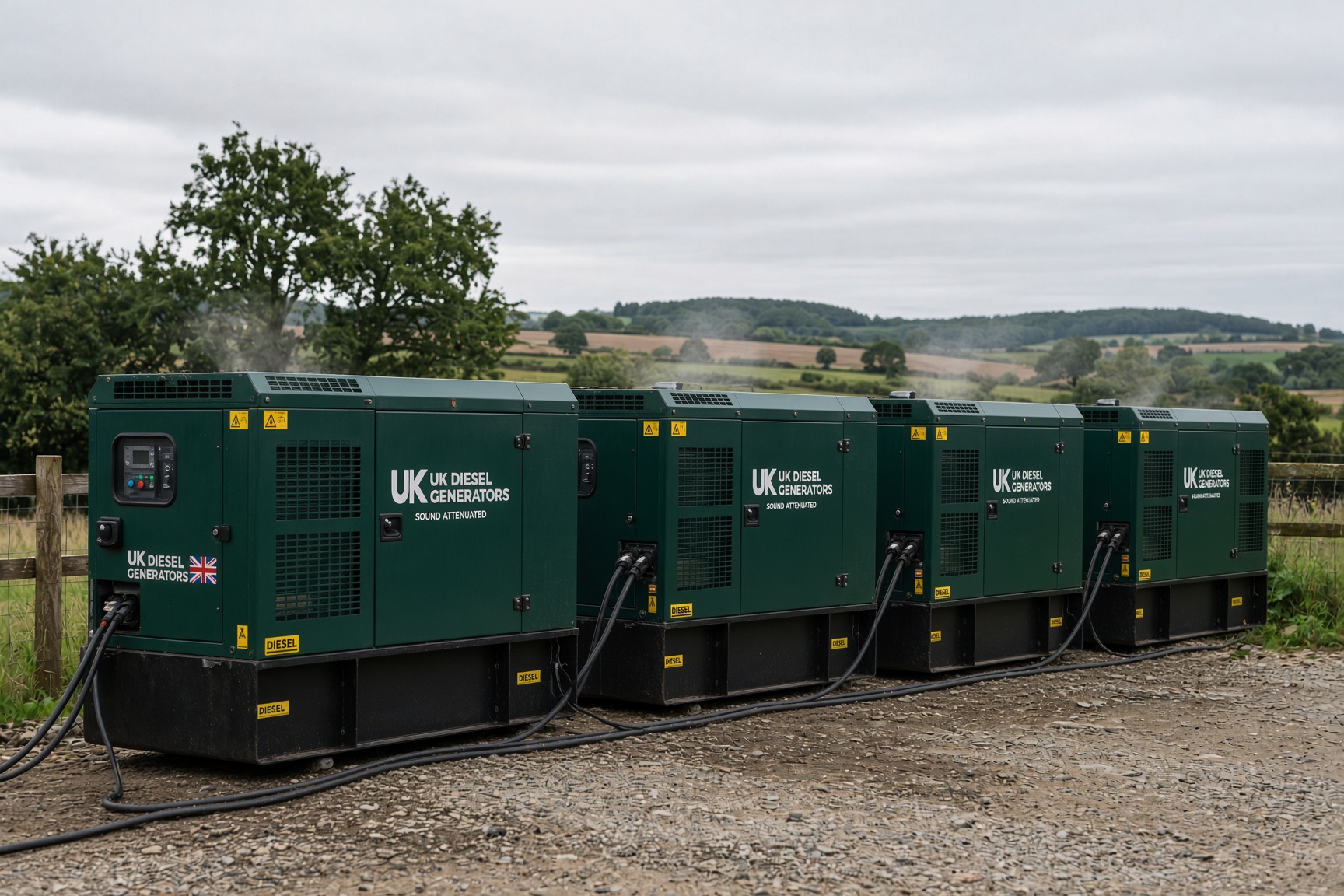
But one of the biggest unresolved questions is how the site will actually be powered.
The Home Office’s own Utilities & Infrastructure Assessment identifies an estimated maximum electrical demand of 2.16 MVA. At present, elements of the existing electricity infrastructure have not been fully verified, meaning the proposals could require significant reliance on diesel generators.
That raises two major concerns: cost and environmental impact.
What could diesel generation cost?
Using the Home Office’s own estimated power demand, and applying published UK diesel prices and standard generator fuel-consumption assumptions, we estimate that a typical operating load could require around:
£10,752 of diesel every day
At periods approaching maximum demand, that figure could rise to approximately:
£19,488 per day
Those are not annual figures. They are potential daily fuel costs.
Even allowing for variations in demand and diesel prices, the scale of the numbers raises an obvious question:
Is relying on diesel generation a sensible or sustainable way to power a site intended to operate for up to 10 years?
The environmental impact could also be significant
The same estimates suggest diesel generation at a typical load could produce approximately:
20 tonnes of CO₂ equivalent every day
At close to maximum demand, that could rise to around:
36 tonnes per day.
Over a prolonged period, that would amount to a substantial carbon footprint simply from generating electricity for the site.
Of particular concern is that the Home Office’s Air Quality Screening Technical Note does not appear to assess emissions from the proposed generators themselves.
If diesel generators are expected to form a significant part of the site’s energy supply, we believe their potential impact on local air quality and carbon emissions should be properly assessed before planning permission is granted.
Basic infrastructure should be resolved before permission is granted
This is not just about electricity.
The Government’s own infrastructure assessment also identifies uncertainty around wastewater capacity, with the proposal relying on a new on-site treatment plant and associated discharge arrangements.
For a development intended to accommodate more than 1,250 people, these are fundamental services.
We believe residents are entitled to ask whether a site of this scale should be approved while essential infrastructure — including power and wastewater — still depends on further investigation, design and delivery.
Why this matters as a planning objection
Infrastructure, air quality, environmental impact and the sustainability of a development can all be relevant planning considerations.
If you are concerned, you can raise points including:
- the extent to which the site may depend on diesel generators
- the potential daily fuel cost of that reliance
- the associated carbon emissions
- whether generator emissions have been adequately considered in the air-quality assessment
- whether a long-term development should be approved without a confirmed sustainable electricity supply
- the remaining uncertainty around wastewater infrastructure
You do not need to reproduce calculations or write a technical submission.
Simply explain, in your own words, why you are concerned that a development of this scale could rely heavily on diesel generation and why you believe the infrastructure and environmental implications should be fully resolved before permission is granted.
Have your say before 17th September
The formal objection window closes on 17th September 2026.
We have created pre-filled emails, a full objection template and guidance to help residents submit evidence-based planning objections.
Please take a few minutes to make your objection today.
OBJECT TO THE PROPOSAL