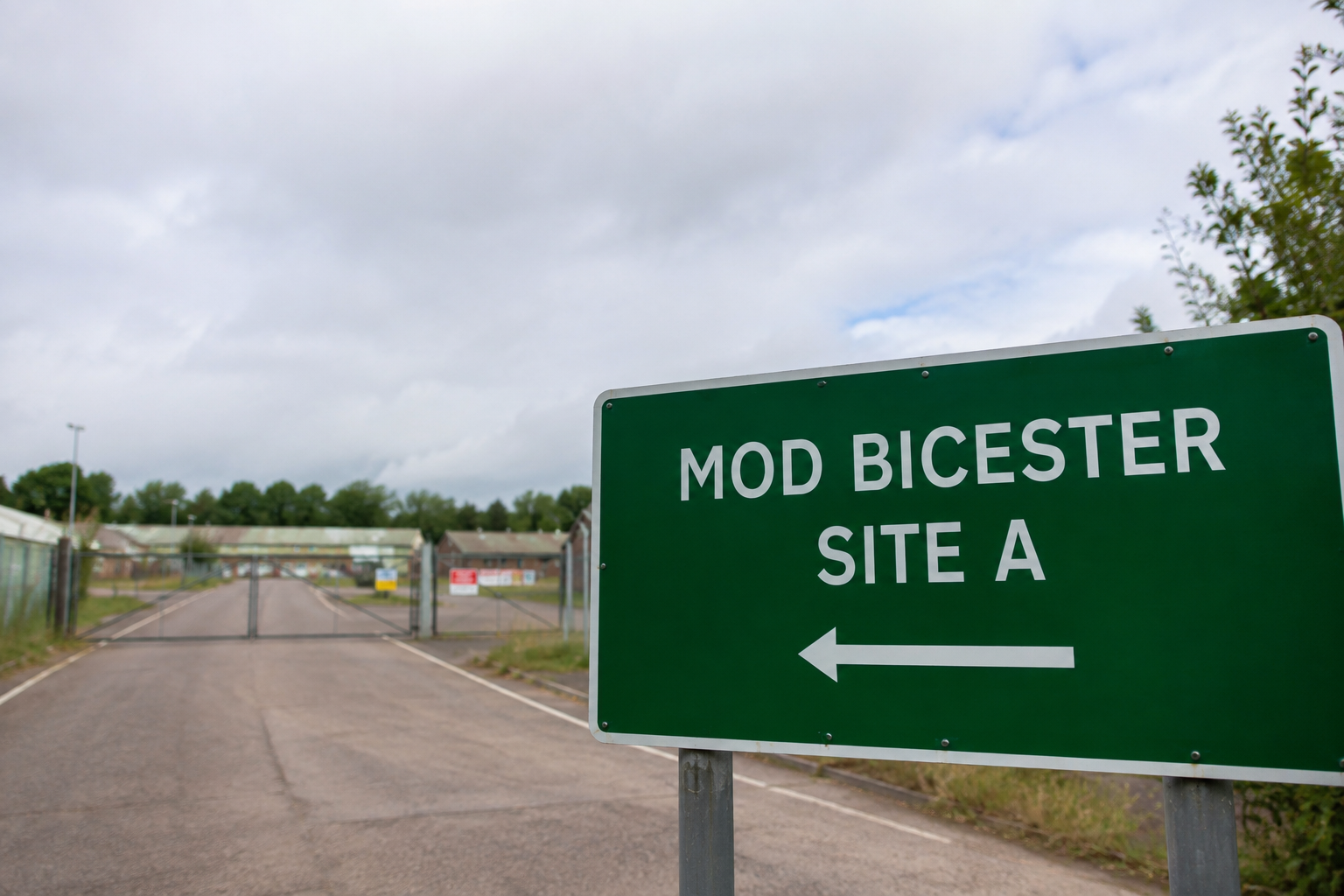
The current proposal for asylum accommodation at MOD Bicester Site A is not the first time the Government has attempted to establish a large centre at Bicester.
In 2001, the Home Office announced plans for a programme of purpose-built asylum accommodation centres, with Bicester intended to be the first.
The proposal faced significant local opposition and a lengthy planning process. Planning permission was eventually granted in 2003 after the Secretary of State intervened following the planning inquiry.
But the centre was never built.
In June 2005, the Government cancelled the Bicester project, citing falling asylum applications, improvements in the way claims were being processed and increasing project costs.
A subsequent investigation by the National Audit Office found that approximately £28 million of Home Office expenditure related to the Bicester project before it was abandoned. The NAO also found that delays in the planning process had increased costs and that the Home Office had not adequately modelled the financial risks associated with those delays.
The House of Commons Public Accounts Committee later reported that £29.1 million had been spent planning and designing the Bicester centre between 2001–02 and 2005–06. It criticised the project’s handling, including the failure to properly account for planning delays and the decision to enter into contractual commitments before the planning process had been completed.
The Committee also highlighted a wider lesson that feels particularly relevant today: Government departments should improve the “effectiveness and scope of consultation with the local community and other stakeholders.”
Nearly twenty-five years later, the Government is once again proposing large-scale asylum accommodation at MOD Bicester.
The circumstances and planning system are not identical, and the earlier project cannot simply determine the outcome of the current proposal. But its history raises legitimate questions.
What lessons have been learned? How has the Government assessed the financial risks this time? Why is the current proposal being progressed through an urgent planning route? And what safeguards are in place to prevent another costly failed project?
Wrong Plan. Wrong Site. believes the Government should address that history openly before committing further public money to Site A.
Read the National Audit Office report Read the Public Accounts Committee report