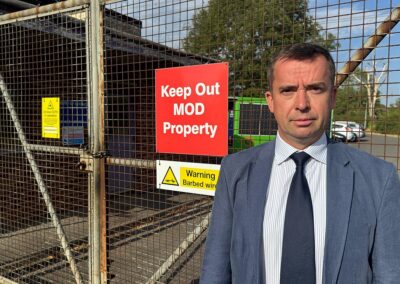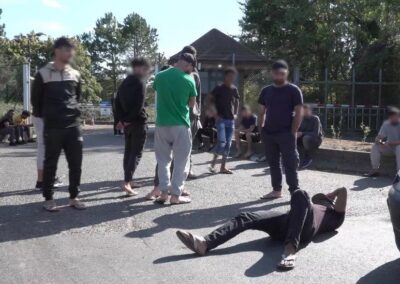
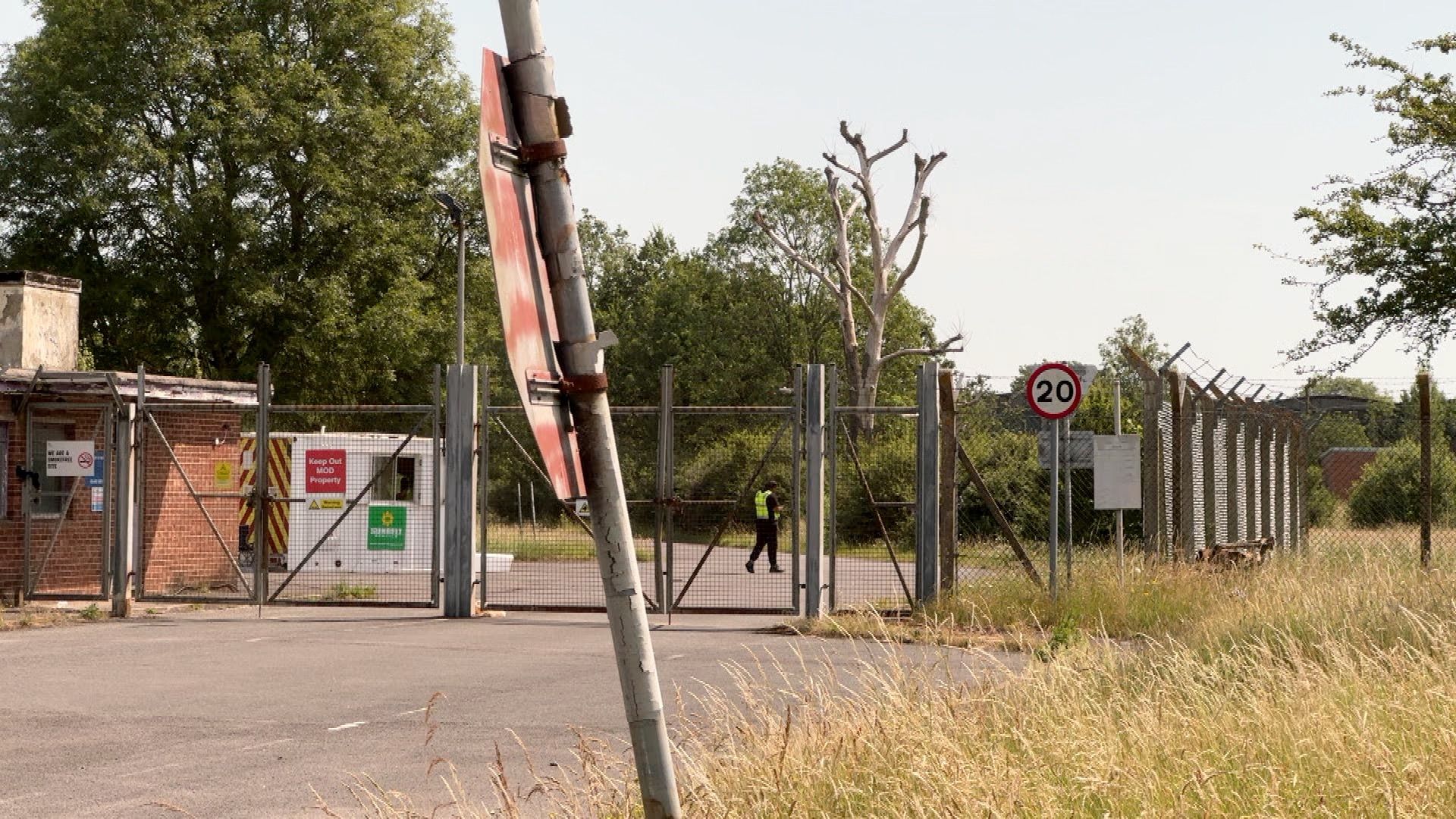
The Home Office has formally submitted its Urgent Crown Development application to use MOD Bicester Site A as accommodation for up to 1,256 single adult male asylum seekers – revealing substantially more detail about the scale of the proposed development.
The application was validated by the Ministry of Housing, Communities and Local Government on 2 September 2026.
It seeks full planning permission for the temporary change of use of Site A for ten years and proposes a significant new accommodation complex including two-storey modular accommodation, healthcare and welfare facilities, catering, classrooms, recreation facilities, security infrastructure, staff facilities, roads, parking and a wastewater treatment plant.
The Government has published dozens of supporting documents alongside the application, covering transport, drainage, utilities, ecology, heritage, healthcare, equality, security and other issues.
Wrong Plan. Wrong Site. is reviewing those documents in detail.
Already, however, several important issues have emerged.
Government admits the location is “not ideal”
One of the clearest admissions appears in the Government’s own Transport Assessment.
It states that:
“the location of the site is not ideal”
when considered in terms of sustainable transport accessibility.
The accompanying Planning Statement confirms that there is currently no pedestrian infrastructure along the B4011 beside the site, leaving both entrances inaccessible on foot. There is also no cycle infrastructure along this section of road, which has a 60mph speed limit.
The Transport Assessment also says that, because of the rural location, there are limited amenities nearby.
The Government proposes dealing with this by making the site as self-contained as possible and providing shuttle buses or minibuses for necessary off-site journeys.
Residents will be free to leave the site
Despite the emphasis on making the development self-contained, this would be non-detained asylum accommodation.
The Government’s Equality Impact Assessment confirms that residents would be able to leave the site and would be free to interact with the local community and use local amenities and public spaces.
This makes the suitability of the site’s rural location, transport links and relationship with neighbouring communities particularly important considerations.
Ten years – but designed to operate for longer
The application is formally seeking permission for a ten-year temporary use.
However, the Transport Assessment states that the proposed facilities are being designed to operate for longer should use beyond ten years be required.
Wrong Plan. Wrong Site. believes residents deserve absolute clarity about what “temporary” means and what safeguards would prevent the development becoming a much longer-term feature of the area.
Major infrastructure questions remain
The Government’s own Utilities and Infrastructure Assessment also identifies a number of matters which have not yet been resolved.
It says the condition and capacity of elements of the existing electricity infrastructure have not yet been verified.
Questions also remain over wastewater.
The assessment says there is insufficient information currently available to confirm whether the municipal wastewater network could accommodate the development. The current design therefore assumes the construction of a new on-site wastewater treatment works, new outfall and new discharge permit.
Evidence of existing ponding and localised flooding has also been recorded, while further detailed investigation is required to verify elements of the proposed surface-water strategy.
For a development intended to accommodate more than 1,250 people, these are significant issues that require close scrutiny.
Healthcare details are still being discussed
The Government argues that providing healthcare facilities on the site will minimise pressure on existing local services.
But although the Planning Statement claims the scheme should not adversely affect local healthcare capacity, the Equality Impact Assessment acknowledges that the exact healthcare provision remains subject to discussion with local health authorities.
This is precisely the kind of detail local communities need to understand before a decision is made.
Full operational plan has not yet been produced
The application contains an Outline Operational Management Plan covering issues such as security, welfare, site management and access.
However, the Government states that a full Operational Management Plan will only be prepared after the service provider has been appointed.
That raises an obvious question: how can the full local impact of the proposal be properly assessed before the detailed arrangements governing a site accommodating up to 1,256 people have been finalised?
Why is this being treated as “urgent”?
Rather than applying through the ordinary local planning process, the Home Office is using the special Urgent Crown Development procedure.
Its own Statement of National Importance explains why.
The Home Office says the alternative Crown Development process could take approximately 12 weeks, potentially delaying the development into 2027. Its preferred timetable envisaged obtaining permission in late summer 2026 so that work could begin as quickly as possible.
Wrong Plan. Wrong Site. believes that raises a fundamental question:
Should the need to meet a Government delivery timetable justify accelerating the planning process for a development of this scale and importance to surrounding communities?
The fight is not over
Crucially, the publication of the application does not mean the proposal has been approved.
The Government’s own information says that no final decision has been taken and that the development remains subject to the planning process, wider due diligence and other necessary assessments and approvals.
The application is currently marked “Validated”, and the Government says the formal representation period will be confirmed in due course.
That representation period will give residents and organisations an important opportunity to make their views known.
Wrong Plan. Wrong Site. will now be reviewing the full application and its supporting evidence in detail.
We will publish further analysis and guidance on how residents can respond as soon as the representation process opens.
This is a significant new stage in the campaign – but it is not the end of it.
The proposal can still be challenged.
Help us challenge the proposal
The Government has now published its case for putting one of the UK’s largest asylum accommodation centres at MOD Bicester Site A.
Now we need to make sure the voice of our communities is heard just as clearly.
Donate to support the campaign. Together, we can continue to make the case that this is the wrong plan in the wrong place.