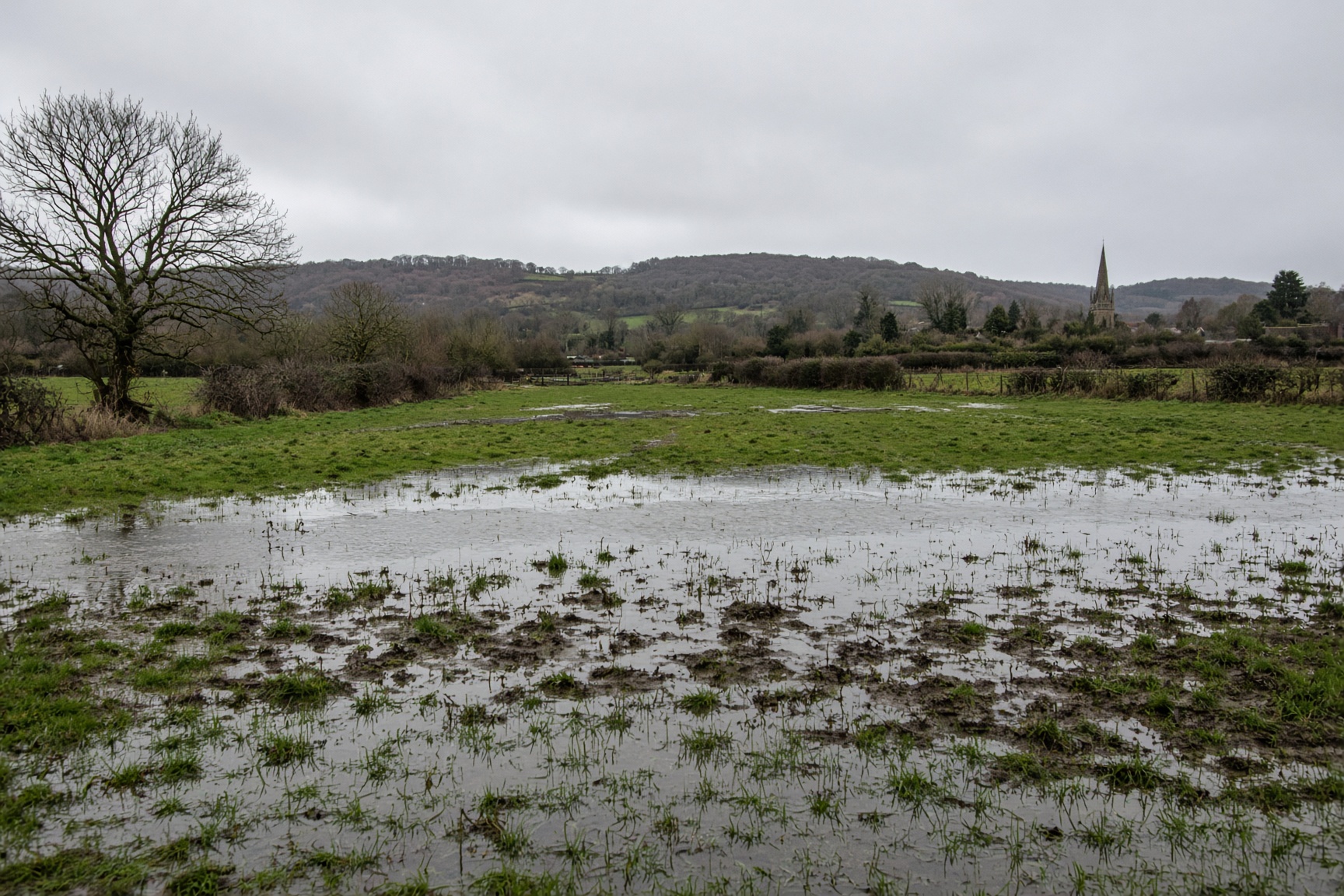
Water has to go somewhere when heavy rain falls. That sounds obvious, but it becomes a major engineering question on a low-lying former military storage site covered with old concrete roads and hardstanding. The MOD Bicester Site A application includes a Flood Risk Assessment and a Drainage Design Statement, both of which deserve close attention before the proposed accommodation is occupied.
What the Published Documents Tell Us
Surface-water drainage is different from sewage. It must handle rain falling on roofs, roads and paved areas without flooding buildings or sending unacceptable runoff elsewhere. Existing gullies, drains and pumps may need repair, replacement or further investigation; new accommodation and access routes may alter how water moves across the site. The published proposal also includes pumping and attenuation measures, which need dependable maintenance and arrangements for power failures.
Why This Matters
A drainage system that works in ordinary rain is not necessarily sufficient in an intense storm. Designers also have to consider future rainfall and safe exceedance routes when the system’s capacity is overwhelmed. The location of sleeping accommodation, pedestrian routes and emergency access becomes particularly important if the site contains areas susceptible to surface-water accumulation.
Why the Existing Concrete Changes the Question
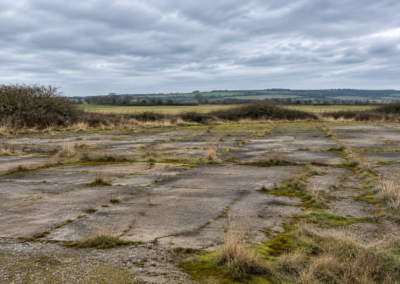
A field and a large expanse of old hardstanding behave very differently in a storm. Rain that might soak into vegetation can instead travel quickly across paved surfaces, collecting where levels dip or existing drainage is blocked. Site A’s low-relief landscape makes the location and condition of drains particularly important. A robust proposal needs to account not only for runoff from any new roofs and roads but also for how the existing paved areas perform today. The different phases must work individually: Phase 1 cannot safely depend on pumps or outfalls that will not be installed until later.
There is an important taxpayer issue as well. New attenuation, pumping, pipework, backup power and maintenance contracts are not free additions to a modular-housing budget. If the design needs changes following surveys, the financial and delivery consequences should be visible before commitments are made. None of this proves the site is unbuildable. It does challenge the assumption that reusing a former depot automatically makes the accommodation straightforward. We believe communities should be shown how the drainage would work during a severe storm, not asked to accept that a solution will be designed later.
Questions That Deserve Answers
We would like to see a comprehensible plan showing where stormwater is collected, stored and discharged; which parts rely on pumps; who maintains the equipment; and how residents and emergency vehicles would be protected during severe weather. The question is not whether flooding makes all development impossible. It is whether a detailed, funded and robust drainage solution has been demonstrated for this particular use.
Further Reading
Read the published Home Office application documents and the Cherwell planning register. For background guidance, see relevant environmental information.