Prime Minister Andy Burnham has argued that wealthier areas of the country should take on a greater share of responsibility for accommodating asylum seekers. But with MOD Bicester intended to provide temporary accommodation during the initial stages of asylum processing, Wrong Plan Wrong Site asks whether the Government’s commitment to sharing responsibility extends beyond the time people spend at these facilities.
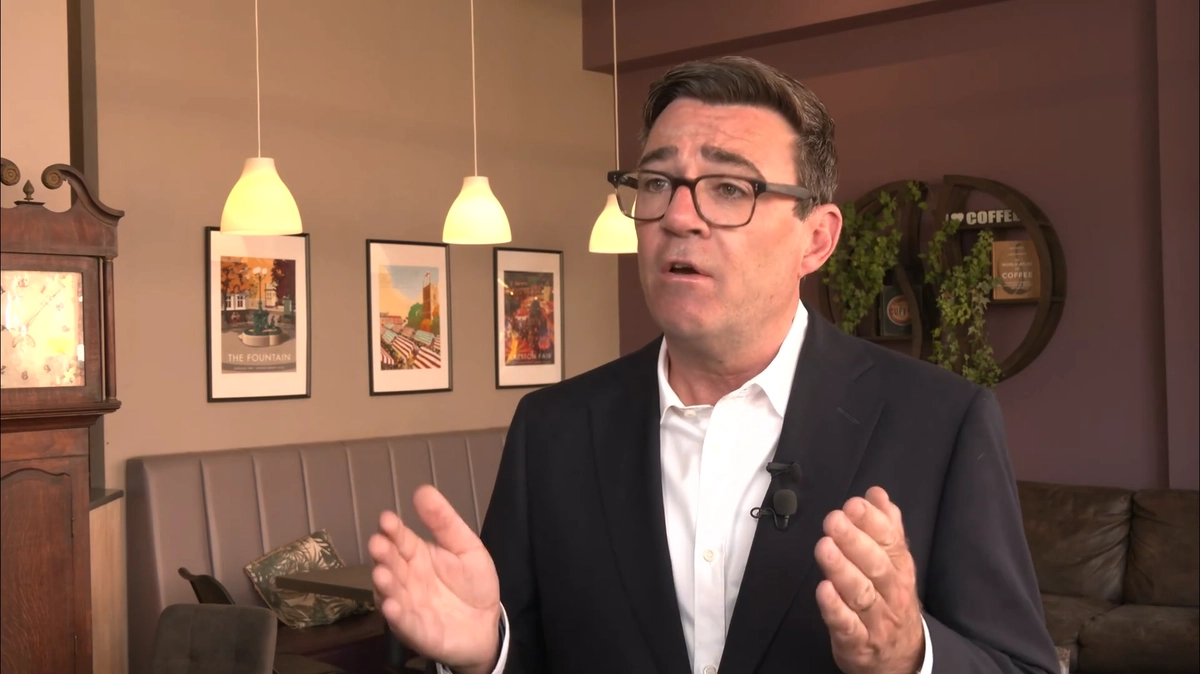
In August 2026, responding to concerns surrounding the proposed asylum accommodation centre near Piddington in Oxfordshire, Prime Minister Andy Burnham argued that the responsibility for accommodating asylum seekers should be shared more fairly across the country.
Speaking to GB News, he said:
We cannot have a situation where it’s only the poorest communities in the country that receive all of the dispersal of refugees and asylum seekers.
It is an argument that will undoubtedly resonate with many people, particularly those living in communities that have accommodated large numbers of asylum seekers over many years. The principle that responsibility should be distributed fairly, rather than concentrated in particular towns, cities or regions, is understandable.
However, when examined in the context of the Government’s proposals for MOD Bicester Site A, Burnham’s argument raises an important question.
The proposed Bicester facility is intended to provide temporary accommodation during the initial stages of the asylum process. It is not intended to provide permanent homes for those accommodated there.
If the Government is committed to sharing responsibility more fairly across the country, what happens when people leave these facilities? Is the responsibility for their longer-term housing also being redistributed, or are we simply changing where they spend the initial stages of the asylum process?
It is a distinction that deserves considerably more attention than it has received.
Temporary accommodation is not permanent settlement
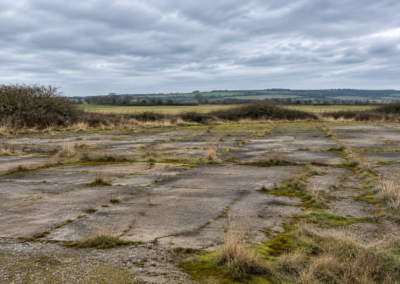
The Government has now granted planning permission for the proposed asylum accommodation centre at MOD Bicester Site A, which could accommodate up to 1,256 single adult men at any one time.
The Home Office’s published factsheet makes clear that those accommodated at the facility would not all go on to live in the surrounding community. Instead, it states that residents would normally be accommodated at the site during the initial processing stage of their asylum claims.
Government documentation has referred to individual stays of up to 90 days, although questions remain about how this would operate in practice and whether that period would represent an enforceable maximum.
This means that Site A is fundamentally different from a conventional housing development. It would accommodate a continuously changing population, with people arriving, spending a period of time at the facility and subsequently moving elsewhere.
Some may be transferred to other asylum accommodation while their claims remain outstanding. Others may receive a decision on their asylum claim and, if granted refugee status, need to find alternative accommodation. A stay of 90 days at Bicester does not necessarily mean that an asylum claim will have been completed within that period.
The Government’s proposals therefore raise a question that goes beyond the immediate operation of the site.
Accommodating someone temporarily in Oxfordshire is not the same as providing them with a permanent home in Oxfordshire.
If the wider objective is to ensure that wealthier areas take on a greater share of responsibility, understanding what happens after residents leave these centres is fundamental to assessing whether that objective is actually being achieved.
Where are asylum seekers currently accommodated?
There is evidence to support Burnham’s argument that responsibility for asylum accommodation has historically been unevenly distributed across the country.
According to the University of Oxford’s Migration Observatory, the North West of England accommodated approximately 20% of all supported asylum seekers in the UK at the end of 2025, making it the region with the largest share. London accounted for around 15%, having previously accommodated approximately 20% at the end of 2023.
The Government’s own immigration statistics show that, at the end of June 2026, the local authorities accommodating the largest numbers of supported asylum seekers included:
- Glasgow: 3,938
- Birmingham: 2,136
- Liverpool: 1,961
- Coventry: 1,700
- Belfast: 1,540
Relative to their overall populations, the North East and North West of England accommodated the highest numbers of supported asylum seekers.
The Government has sought to address these historical imbalances through its Full Dispersal Model, under which all local authority areas are expected to participate in the asylum accommodation system. In a parliamentary answer on 4 September 2026, Minister for Border Security and Asylum Anna Turley explained that the policy is intended to ensure that no individual region or local authority bears a disproportionate share of responsibility.
However, the same parliamentary answer acknowledged that the availability of suitable accommodation, historic participation in dispersal arrangements and the ability of providers to secure properties in particular areas all influence where people are accommodated.
In other words, the distribution of asylum accommodation is not determined by political ambition alone. It is also influenced by the practical realities of the housing market.
Crucially, these statistics and dispersal arrangements concern people receiving Home Office asylum support. They do not tell us where those individuals ultimately settle after being granted refugee status.
That is where a rather different set of challenges begins.
The reality of Oxfordshire’s housing market
Anyone who has attempted to buy or rent a home in Oxfordshire will understand the difficulties associated with finding suitable, affordable accommodation in this part of the country.
Oxford is consistently among the most expensive places to live outside London, while Bicester and the surrounding area have experienced considerable increases in housing costs alongside significant population growth.
According to the Office for National Statistics, average monthly private rents in September 2026 were:
| Local authority | Average monthly private rent |
|---|---|
| Oxford | £1,957 |
| Cherwell, including Bicester | £1,316 |
| Birmingham | £1,106 |
| Liverpool | £916 |
Oxford had the highest average private rent of any local authority outside London.
The differences are substantial. Average private rents in Oxford were more than twice those in Liverpool, with an annual difference of more than £12,000.
For people already living and working in Oxfordshire, these housing costs present significant challenges. Families looking for affordable homes, young people seeking to move out of their parents’ properties and those facing homelessness are all attempting to navigate a housing market in which suitable accommodation can be extremely difficult to secure.
For someone leaving the asylum system and attempting to establish a new life, those same financial and practical barriers will apply.
Refugees may also face additional difficulties, including limited savings, a lack of employment history, difficulties securing rental deposits and unfamiliarity with the UK housing system.
The Government can choose to locate an asylum accommodation centre in an affluent part of the country. It cannot simply choose to make the surrounding housing market affordable.
This is why the distinction between temporary accommodation and longer-term settlement is so important. Without addressing the availability and affordability of housing, there is a risk that the Government’s ambition to distribute responsibility more fairly will encounter precisely the same economic pressures that have historically concentrated asylum accommodation in particular areas.
What happens when someone is granted refugee status?
When someone is granted refugee status, their circumstances change considerably. They are permitted to work, can access mainstream benefits where eligible and are generally required to leave the accommodation provided to them through the asylum support system.
At that point, they need to secure somewhere else to live.
This does not mean that the Government automatically provides them with a permanent home, nor does it mean that they are necessarily required to remain in the area where their asylum claim was processed. They may seek private rented accommodation, access social housing where eligible, stay with friends or relatives, or approach a local authority for homelessness assistance.
A joint study undertaken by the Home Office, the Office for National Statistics and the Ministry of Housing, Communities and Local Government examined the housing circumstances of refugees in England and Wales.
The Refugee Integration Outcomes study found that approximately 51% of households whose members had been granted asylum lived in privately rented or rent-free accommodation, while nearly 46% lived in social rented accommodation. Fewer than 4% owned or partly owned their homes.
The findings illustrate the importance of the rented housing sector in supporting people who have been granted refugee status. They also underline why differences in housing availability and affordability between different parts of the country matter.
For someone attempting to find work, establish financial independence and secure a permanent home, the difference between the cost of renting in Oxford and renting in a substantially cheaper area could be decisive.
Of course, housing costs are not the only consideration. Employment opportunities, family connections, established communities and access to support services can all influence where people choose to settle.
However, if accommodation is substantially more affordable elsewhere, it is reasonable to ask whether people leaving facilities such as MOD Bicester will ultimately seek housing in those areas.
If that happens on a significant scale, will the longer-term responsibility genuinely have been redistributed, or will many of the same communities continue to provide the housing and services needed after asylum claims have been decided?
The housing problems do not end when asylum support ends
There is already considerable evidence that the transition out of asylum accommodation presents significant challenges, both for refugees themselves and for local authorities.
Government statistics for England show that during the 2024–25 financial year, 16,340 households were assessed as homeless or threatened with homelessness after being required to leave Home Office asylum accommodation.
Of those households, 73.4% were already homeless when initially assessed by their local authority.
These are not figures relating specifically to MOD Bicester, nor do they tell us where people leaving the proposed facility would ultimately settle. However, they demonstrate that the responsibility for supporting people does not simply disappear when Home Office accommodation ends.
In many cases, it transfers into the mainstream housing and homelessness system, with significant consequences for the local authorities responsible for delivering those services.
A Government-commissioned evaluation, published in June 2026, examined several initiatives intended to improve the transition out of asylum accommodation, including an extended move-on period, the introduction of specialist liaison officers and additional financial support for selected councils.
The evaluation found that these measures had improved aspects of the process, but that shortages of suitable housing remained the most significant obstacle to securing successful outcomes.
It also identified the need for sustainable funding, better coordination between the Home Office and local authorities, and action to address underlying housing shortages.
This is particularly relevant to Burnham’s argument. If the Government is seeking to redistribute responsibility more fairly, it must consider not only the locations of asylum accommodation centres, but also the pressures that arise when people leave them.
Otherwise, there is a risk that one part of the country accommodates people during their initial asylum processing, while another continues to shoulder a disproportionate share of the longer-term housing and homelessness responsibilities.
Has the Government considered what happens after Bicester?
The question of onward accommodation has already been raised by the local planning authority.
In its formal objection to the proposed development at MOD Bicester, Cherwell District Council requested clarification of the anticipated length of individual stays, resident turnover and onward accommodation arrangements.
The council recognised that the implications of a continuously changing population cannot be assessed solely by considering the maximum number of people accommodated at the site.
These concerns are particularly important in the context of the Government’s wider policy.
If residents are expected to leave Site A after relatively short stays, there must be an understanding of where they are likely to go next, whether that involves further Home Office accommodation or moving into the mainstream housing system following an asylum decision.
Will a significant proportion be transferred to other parts of the country? If so, which regions are expected to accommodate them?
Will those granted refugee status be supported to find housing in Oxfordshire, and what assessment has been made of the availability and affordability of that housing?
What additional resources would be provided to local authorities if people leaving the facility require homelessness assistance?
The Home Office’s current factsheet confirms that residents would not all go on to live in the local community, but it does not provide a detailed explanation of their anticipated onward destinations.
Nor have we identified a published plan from the Prime Minister setting out how the longer-term geographical distribution of refugees would be addressed as part of his commitment to sharing responsibility more fairly.
The Government has set out where it wants to accommodate people during the initial stages of the asylum process. It has not yet provided the same level of clarity about what happens afterwards.
Wealthier communities are not necessarily better equipped
There is another important issue with the suggestion that wealthier parts of the country should take on a greater share of asylum accommodation.
The relative affluence of an area does not necessarily mean that it has more available housing, greater healthcare capacity or better infrastructure.
In fact, in areas such as Oxfordshire, high housing costs can themselves contribute to difficulties recruiting and retaining essential workers, including healthcare professionals, teachers and social care staff.
As we have previously highlighted, Bicester’s healthcare infrastructure is already facing significant challenges in keeping pace with the town’s existing population growth. Local authorities have identified the need for additional GP facilities, expanded clinical space and improvements to essential infrastructure.
The proposed Site A facility would introduce further demands, even if much of its day-to-day operation were supported by dedicated on-site services.
The question is therefore not simply whether Oxfordshire is a relatively wealthy part of the country. It is whether the particular location selected has the infrastructure, services and accessibility necessary to support a development of this scale.
Wrong Plan Wrong Site recognises the importance of sharing national responsibilities fairly. But that principle cannot be used as a substitute for a detailed assessment of site suitability.
Being located in a relatively affluent county does not automatically make MOD Bicester Site A an appropriate location for a major asylum accommodation centre.
A policy based on geographical fairness must still take account of the practical circumstances of each location, including the availability of housing, healthcare, transport, employment opportunities and other essential services.
What does sharing responsibility actually mean?
There is a reasonable argument that accommodating asylum seekers temporarily in wealthier areas does represent a redistribution of responsibility. Operating facilities such as Site A involves costs, infrastructure, staffing and demands on local services, even if the people accommodated there subsequently move elsewhere.
Wrong Plan Wrong Site does not dispute that.
However, Burnham’s original comments referred to the dispersal of both refugees and asylum seekers. That raises a wider question about whether the Government’s ambitions extend beyond the provision of temporary accommodation.
Asylum seekers awaiting decisions and refugees who have been granted permission to remain in the UK have different circumstances, different housing arrangements and different needs. A policy that addresses the distribution of one group does not necessarily address the distribution of the other.
If the Prime Minister’s objective is limited to sharing responsibility for temporary asylum accommodation, the Government should make that distinction clear.
If, however, the ambition is to ensure that the longer-term responsibilities associated with refugee settlement and integration are shared more fairly across the country, then a much broader strategy is required.
That strategy would need to consider where suitable housing is available, how refugees can access employment and support services, what resources local authorities require and how existing housing pressures will be addressed.
Without such a strategy, there is a risk that the political argument for a fairer distribution of responsibility extends considerably further than the policy being delivered.
An open question to Andy Burnham
Wrong Plan Wrong Site would welcome clarification from the Prime Minister about the wider strategy behind his commitment to distributing asylum accommodation more fairly across the country.
In particular, we would welcome answers to the following questions:
- Does the commitment to sharing responsibility more fairly extend beyond temporary asylum accommodation to the longer-term housing and integration of refugees?
- Where are people accommodated at facilities such as MOD Bicester expected to go when they leave? Is there an assessment of their likely onward destinations?
- How does the Government intend to address the considerable differences in housing costs and availability between Oxfordshire and other parts of the country?
- What additional funding and resources will be provided to local authorities responsible for supporting people who leave asylum accommodation and subsequently face housing difficulties?
- How will the Government measure whether its policy has genuinely reduced the disproportionate pressures experienced by some communities, rather than simply redistributing temporary accommodation?
We would welcome the opportunity to discuss these questions directly with the Prime Minister or the relevant Government ministers.
These are not questions about whether particular communities should be exempt from national responsibilities. Nor are they an argument against providing appropriate accommodation and support to those who need it.
They are questions about whether the Government’s proposed approach will achieve the objectives it has set out, and whether the longer-term consequences of that approach have been properly considered.
A national policy needs a complete plan
The Government has a responsibility to provide safe and appropriate accommodation for people seeking asylum, to process their claims efficiently and to support those granted refugee status in establishing independent lives.
It also has a responsibility to ensure that the communities delivering these services have the resources, infrastructure and housing capacity necessary to do so.
Andy Burnham’s argument that the country’s poorest communities should not be expected to bear a disproportionate share of responsibility deserves proper consideration. But so too does the question of whether temporarily accommodating people in wealthier areas will achieve the wider redistribution he appears to advocate.
The differences in housing costs across the country are substantial. The difficulties people experience when leaving asylum accommodation are well documented. And the pressures on housing and public services are not limited to the areas traditionally associated with asylum dispersal.
Against that background, establishing a large temporary accommodation centre in Oxfordshire is only one part of a much more complicated national picture.
The Government needs to demonstrate how the entire process will work, from initial accommodation and asylum processing through to onward housing, employment and integration.
It needs to explain how responsibility will be distributed at each stage, how the necessary services will be funded, and how the success of its policy will be measured.
Until those questions are answered, it is difficult to assess whether the proposed facility at MOD Bicester will genuinely contribute to a fairer distribution of responsibility across the country, or simply move one part of the process to a different location.
The Prime Minister has told us that all parts of the country must play their part.
We would welcome the opportunity to understand precisely what that means, not just during the first few months of someone’s asylum journey, but in the years that follow.
Prove it before you proceed.
Further reading
- Andy Burnham’s comments on the distribution of asylum accommodation – The Independent, 11 August 2026
- Home Office factsheet – MOD Bicester Site A
- Government planning application – MOD Bicester Site A
- University of Oxford Migration Observatory – Asylum accommodation in the UK
- Home Office immigration statistics – year ending June 2026
- Parliamentary question – the distribution of asylum seekers in the North West
- ONS housing prices and rents – Oxford
- ONS housing prices and rents – Cherwell
- ONS housing prices and rents – Birmingham
- ONS housing prices and rents – Liverpool
- Refugee Integration Outcomes – housing, economic activity and integration
- Government statutory homelessness statistics – England, 2024–25
- Home Office evaluation of initiatives to enhance the move-on process
- Cherwell District Council’s formal objection to Site A